By Claire Whitaker
Updated November 2026
If your headphone adapter is not working, the cause is usually one of a few simple problems: a loose or partially inserted plug, dirt or corrosion inside the connector, a device setting that is routing audio somewhere else, or an adapter that is not compatible with your source or headphones. This guide walks you through each check in the order that solves most cases fastest, so you can get sound back without replacing gear you may not need.
Start With a Quick Diagnostic Pass
Before you change any settings, run through a short set of checks. These take less than five minutes and rule out the most common faults.
Shopping for one? See our guide: 7 Best Usb-c to 3.5mm Headphone Jack Adapters for Music and Calls (2026).
- Unplug the adapter from both the source device and the headphones, then plug it back in firmly until it seats fully.
- Confirm the volume is up on the source device and that the app you are playing from is not muted.
- Test the headphones on a different device, such as a phone or laptop you know works. This tells you whether the headphones or the adapter is at fault.
- Test the adapter with a different pair of headphones, if you have one available.
- Play a known-good audio file or a video you have played before, so you are not troubleshooting a broken stream or a corrupted track.
If the headphones work on another device and the adapter works with a second headset, the problem is likely a setting or a mismatch on the original device. If the headphones fail everywhere, the headphones themselves or their cable may be the issue.
Check the Physical Connection
Most adapter failures come down to the physical connection. Small plugs and sockets lose contact easily, especially when they are used with thick cases or when the cable is pulled at an angle.
Seat the Plug Fully
A 3.5 mm plug should click or sit flush into the socket with no visible metal ring showing. If a ring of metal is exposed, the plug is not fully seated. Push it in with a steady motion rather than forcing it at an angle.
Look for Debris and Corrosion
Lint, pocket dust and skin oils build up inside headphone jacks over time. Use a flashlight to inspect the socket. You can clean it gently with a wooden or plastic toothpick wrapped in a small piece of lint-free cloth. Avoid metal tools, which can scratch the contacts or bend the spring-loaded pins. For stubborn residue, a small amount of isopropyl alcohol on a cotton swab can help, but let it dry completely before reconnecting.
Check the Cable for Damage
Bend the cable gently near both ends of the adapter while listening for crackling or dropouts. Intermittent sound that changes when you move the cable usually points to a broken internal wire or a strained solder joint. Repeated bending near the strain relief is a common failure point, and a damaged cable may need to be replaced rather than repaired.
Verify Your Device Settings
Modern phones, laptops and game consoles often have settings that can silently override where audio goes. A correctly working adapter can appear dead if the system is sending sound to a different output.
- Output device: Open your sound settings and confirm the headphones or the adapter’s output is selected as the default playback device. On Windows, this is under Sound settings. On macOS, check System Settings under Sound.
- Bluetooth conflicts: If a Bluetooth device recently paired, the system may route audio to it instead. Disconnect or turn off Bluetooth temporarily to test.
- Mute and balance: Check both the system volume and any per-app volume mixer. Also check left and right balance, since a balance slider pushed fully to one side can make one earbud seem dead.
- Audio enhancements: On Windows, some sound enhancements or spatial audio options can cause odd behavior with certain adapters. Disable them temporarily to test.
- Software restart: Restart the device after changing settings. Some audio drivers only refresh when the system reboots.
Match the Adapter to Your Source and Headphones
Adapters are not interchangeable. An adapter that works perfectly with one device may produce no sound, low volume or distorted audio with another. Compatibility depends on the connector type and, for some adapters, on whether the source provides a digital or analog signal.
| Symptom | Likely Cause | What to Check |
|---|---|---|
| No sound at all | Wrong port or wrong adapter type | Confirm the adapter’s input matches your device’s port (USB-C, Lightning, or 3.5 mm) |
| Sound only in one ear | Mono adapter or wiring issue | Test with a stereo adapter; check the plug for a partial connection |
| Very quiet audio | Impedance mismatch or low output | Check the headphone rating; some high-impedance headphones need an amplifier |
| Crackling or static | Dirty contacts or loose connection | Clean the jack and reseat the plug |
| Sound only when cable is held | Broken internal wire | Replace the adapter or cable |
| Mic not working | Adapter lacks mic support | Confirm the adapter supports a headset with a microphone (4-pole, TRRS) |
For a deeper look at connector types, see Headphone Adapters Explained: 3.5 mm, 6.3 mm and USB-C. If you are using a USB-C device, Usb-c to 3.5mm Headphone Adapter (2026): Pros, Cons & Verdict covers the trade-offs in more detail, and Headphone Jack to 3.5mm Adapter: How to Pick the Right One (Step-by-Step) explains how to confirm you have the right type before buying.
Watch for Digital-Only Adapters
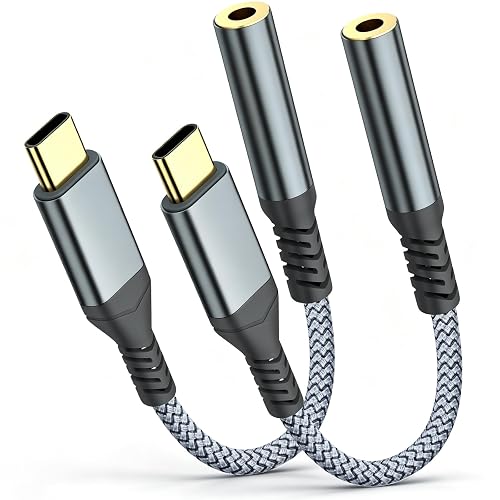
Some USB-C and Lightning adapters contain a small digital-to-analog converter. These only work when the device supports the relevant signal path. Older phones and some laptops may not output audio through a digital port the same way newer ones do. If your adapter has a built-in chip, check the manufacturer’s compatibility notes for your exact device model.
Confirm Your Adapter Type Matches the Headset
Headsets with a microphone usually use a four-conductor (TRRS) plug, while standard headphones use a three-conductor (TRS) plug. Using a TRS-only adapter with a TRRS headset can mute the microphone or leave one channel silent. Similarly, a mono adapter will send the same signal to both ears, which may sound like one side is missing. For that case, Mono to Stereo Headphone Adapter: How It Works and When to Use One explains the difference.
Special Cases: Gaming Consoles, Airplanes and Instruments
Some setups have extra steps that trip people up.
Game Controllers and Consoles
Many controllers have a headset port that works only when the console or controller settings allow it. Check the audio settings on the console and confirm the headset is set as the chat or game output, depending on what you are trying to hear. The guide Headphone Adapter Xbox One Controller: Connect Any Headset (Step-by-Step) walks through this process.
In-Flight Entertainment
Airplane seat jacks sometimes use a different plug style or require a plug adapter. If audio is quiet or missing, confirm you are using the correct adapter for the seat jack type. Headphone Plug Adapter for Airplane Use: A Step-by-Step Guide covers this scenario.
Instruments and Amplifiers
Guitar cables and keyboard outputs use different plug sizes and impedance levels than consumer headphones. If you are running an instrument into headphones, the signal may be too strong or too weak without the right adapter or amplifier. See Guitar Cable Headphone Jack Adapter: Step-by-Step Setup Guide for the correct approach.
Recommended gear
These items can help you test and fix adapter problems. Choose a product that matches your connector type.
- Cleaning swabs for audio jacks: Thin, lint-free swabs let you reach inside a headphone socket without scratching the contacts. View on Amazon
- Known-good adapter for testing: A second adapter you trust helps you isolate whether the original adapter has failed. View on Amazon
- Isopropyl alcohol for contact cleaning: Helpful for stubborn residue on metal contacts when used sparingly and fully dried before use. View on Amazon
- Headphone splitter or test cable: A simple test cable can confirm whether the problem is in the adapter or the headphone cable. View on Amazon
Common Mistakes
- Forcing the plug. Pushing at an angle can bend the contacts inside the jack. Insert straight and steady.
- Using metal tools to clean. Pins, paperclips and needles can damage the socket.
- Assuming the adapter is broken too quickly. A setting change or a wrong output device causes far more failures than hardware does.
- Ignoring compatibility notes. Digital-only or TRRS-specific adapters will fail silently with the wrong device.
- Skipping the second-device test. Without it, you cannot tell whether the headphones or the adapter is the problem.
- Repeatedly bending the cable at the strain relief. This is the most common way adapters fail over time.
Tips for Keeping Your Adapter Working Longer
- Store the adapter loosely coiled rather than wrapped tightly around your hand or a device.
- Keep the port area clean, especially if you carry the device in a pocket or bag.
- Unplug by gripping the plug body, not the cable.
- Test new adapters with both your devices and your headphones before relying on them for something important.
- If you use the adapter often, consider a slightly longer, more flexible cable to reduce strain.
FAQ
Why does my adapter work on one device but not another?
Different devices use different output ports, signal types and audio settings. An adapter designed for a specific port or digital signal may not function on a device that handles audio differently. Check the adapter’s compatibility notes and the device’s audio output settings.
Why is sound only coming from one earbud?
This usually means a partially seated plug, a mono adapter, a damaged internal wire, or a balance setting pushed to one side. Reseat the plug, check the balance slider, and test with a different adapter if the problem continues.
Can I fix a crackling adapter?
Often, yes. Dirty contacts cause most crackling, so cleaning the jack and the plug with a lint-free swab usually helps. If crackling continues when you bend the cable, the internal wiring is probably damaged and the adapter should be replaced.
Why does my microphone not work with the adapter?
Microphones need a four-conductor (TRRS) connection. A three-conductor adapter will carry audio but not the mic signal. Confirm the adapter and your headset both support a microphone.
Does a loud or quiet adapter mean it is faulty?
Not necessarily. Headphones with high impedance need more power, so they may sound quiet on a weak output. Check the headphone’s rated impedance and the device’s output capability. An amplifier may help in that case.
Should I replace the adapter or the headphones?
Test both by swapping them with known-good equipment. If the headphones work elsewhere, the adapter is the problem. If the headphones fail everywhere, the headphones or their cable need attention.
When should I contact the manufacturer?
If the adapter is under warranty and fails after you have ruled out settings, compatibility and cleaning, contact the manufacturer. Keep your device model and the adapter’s part information ready.
Is it safe to keep using a damaged adapter?
A damaged cable can cause short circuits or unexpected loud output in some cases, so stop using it if you see exposed wires, burning smells or heat. If you have hearing concerns or experience pain or ringing after use, consult a healthcare professional.
Conclusion
Most headphone adapter problems come from loose connections, dirty contacts, incorrect device settings or a mismatch between the adapter and the source. Work through the checks in order: test the physical connection, confirm your settings, and verify compatibility before assuming the hardware has failed. With a few minutes of methodical testing, you can usually identify the cause and get your audio working again.
Ready to choose one?
About Claire Whitaker
Claire Whitaker is part of our editorial team and reviews and edits our headphone comfort & accessories + gaming headsets guides, checking product details against manufacturer specifications and owner feedback.